
Why carbohydrates, hydration, and electrolytes matter—and how my homemade energy gels fit into the equation.
I've been running marathons and ultramarathons for years, and if there's one thing I've learned, it's that successful endurance training takes more than putting in the miles.
You can follow a great training plan, work on your pace, and stay consistent week after week. But if you're not giving your body the fuel and hydration it needs, you're potentially making all that hard work even harder.
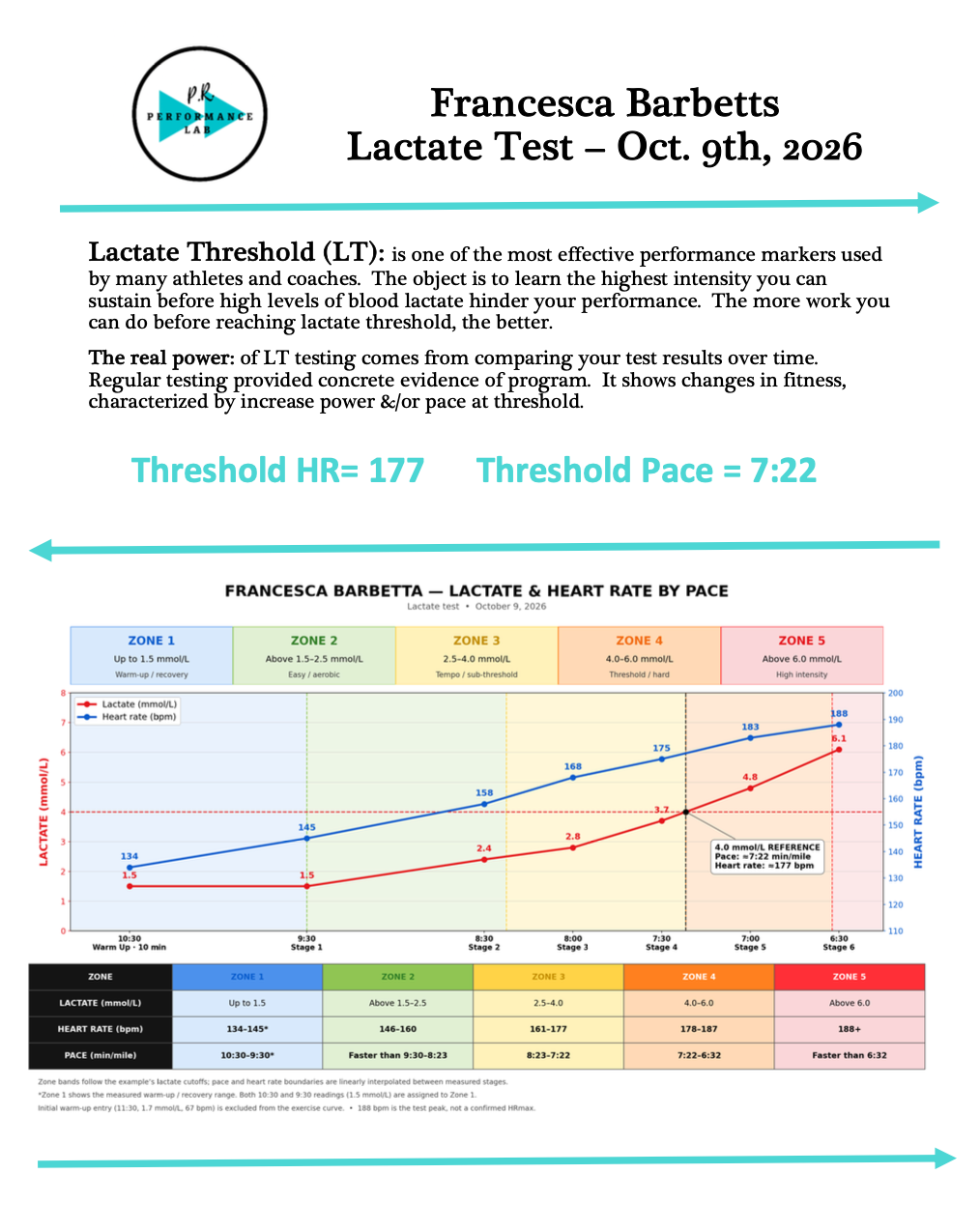
As a running coach and endurance athlete, I'm always looking for ways to better understand how our bodies respond to training. So, on October 9, 2026, I completed a lactate threshold and hydration analysis with PR Performance Lab.
The results gave me a fascinating look at my personal performance and hydration needs—and reinforced something I'm passionate about teaching other runners:
Fueling isn't just something to think about on race day. It's part of how we train.
What My Performance Tests Revealed
My testing measured two important areas of endurance performance: my lactate threshold and my sweat and electrolyte losses.
Here's what I learned:
Test Result:
Lactate threshold pace: 7:22 min/mile
Lactate threshold heart rate: 177 bpm
Average sweat rate: 22.7 oz/hour
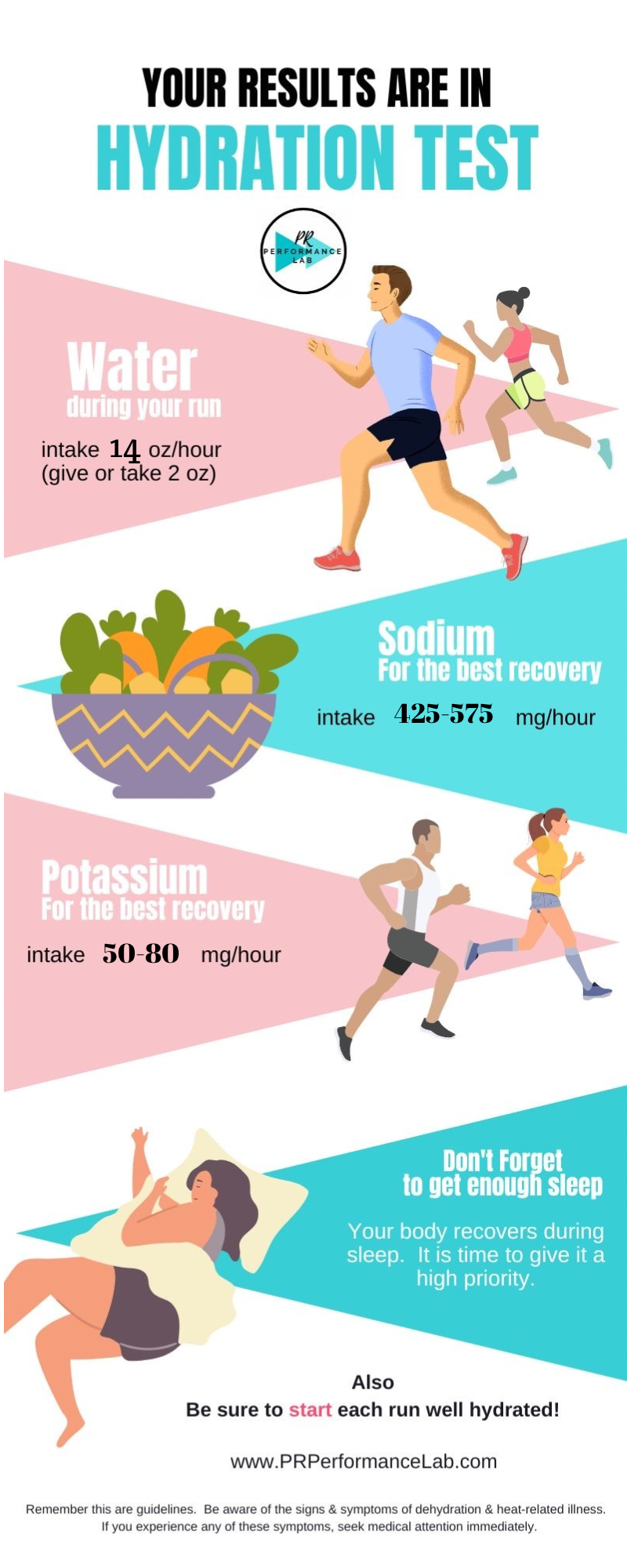
Recommended fluid intake: Approx. 14 oz/hour (±2 oz)
Recommended sodium intake: 425–575 mg/hour
Recommended potassium intake: 50–80 mg/hour
So, what do these numbers actually mean?
My lactate threshold identifies the exercise intensity at which lactate begins accumulating more rapidly in my bloodstream. Knowing my threshold pace and heart rate helps me better understand my training zones and structure workouts effectively.
But what I found especially interesting were my hydration results.
My average sweat rate was 22.7 ounces per hour, meaning that's approximately how much fluid I lose through sweating during an hour of running under the testing conditions.
Here's something runners don't always realize: Two people can sweat the same amount and lose very different amounts of sodium.
My testing revealed a relatively high sodium concentration in my sweat. Based on those results, the lab recommended approximately 425–575 mg of sodium and 14 ounces of fluid per hour during running under similar conditions.
That fluid recommendation isn't intended to replace every ounce I sweat out, and my needs can change based on temperature, humidity, intensity, and duration.
It's a perfect example of why there isn't a one-size-fits-all approach to endurance nutrition.
Here's Where My Homemade Energy Gels Come In
If you've followed me for a while, you probably know I'm a big fan of homemade energy gels!
I originally started making them because I wanted a practical, affordable way to fuel my training using simple ingredients. I wanted to know what was going into my fuel, experiment with flavors I enjoyed, and avoid spending a fortune on individual gel packets.
And here's where my performance lab results made things especially interesting.
Most of my homemade energy gel recipes contain, per pouch:
68–73 grams of carbohydrates
Approximately 500 mg of sodium
Now compare that with my lab recommendation of 425–575 mg of sodium per hour.
One homemade gel contains almost exactly the midpoint of my personalized hourly sodium recommendation!
Of course, that doesn't mean everyone should consume 500 mg of sodium per hour, or that my gels are automatically the perfect fit for every runner. But it's a great example of how a thoughtfully designed homemade fuel can fit into an individualized endurance nutrition plan.
And sodium is only part of the story.
Why Carbohydrates Matter Just as Much
When we run, our muscles rely heavily on carbohydrates for energy, particularly as intensity increases.
Our bodies store carbohydrates as glycogen, but those reserves are limited. During longer efforts, consuming additional carbohydrates helps support sustained performance.
General sports nutrition guidelines suggest:
Exercise duration:
Less than 45 minutes: Additional carbs generally aren't needed
1–2.5 hours: 30–60 g/hour
Longer than 2.5–3 hours: Up to 90 g/hour, depending on tolerance
These are general guidelines, and individual needs vary.
With 68–73 grams of carbohydrates per pouch, my homemade gels can provide a substantial portion of the fuel needed during longer endurance efforts.
For example, consuming one pouch gradually over an hour would provide approximately 70 grams of carbohydrates and 500 mg of sodium. For an appropriately fueled long run, that could be a convenient way to address two important nutritional needs.
But timing and quantity matter! Some runners may need less, others may need more, and higher carbohydrate intakes should be practiced during training to help avoid digestive discomfort.
And remember, gels don't replace hydration. You still need an appropriate fluid intake strategy alongside them.
What Does This Mean for YOUR Running?
You don't need to be a marathoner or have access to professional testing to make smarter fueling decisions.
Here are five things I encourage every runner to remember:
1. Don't wait until you're exhausted to fuel. For runs long enough to require carbohydrates, plan ahead rather than waiting until your energy drops.
2. Practice your fueling during training. Your digestive system needs practice, too! Experiment with different amounts, timing, and combinations of carbohydrates and fluids before race day.
3. Pay attention to the conditions. A cool morning run and a hot, humid afternoon run can require very different hydration strategies.
4. Remember that every runner is different. Your pace, sweat rate, electrolyte losses, training intensity, and digestive tolerance all influence what works best for you.
5. Keep it simple and sustainable. You don't necessarily need expensive products or an elaborate system. A consistent fueling routine using foods and products you tolerate can go a long way.
My Biggest Takeaway: Fueling Is Part of Training
After years of running marathons and ultramarathons, I'm still fascinated by how much there is to learn about our bodies.
My performance testing didn't tell me everything about my nutrition needs, but it gave me valuable insight into my training intensity, fluid losses, and electrolyte requirements.
And seeing how closely the sodium content of my homemade gels aligned with my individual recommendation was a fun reminder of why I started making them in the first place.
Fueling doesn't have to be complicated to be effective.
That's the philosophy behind my homemade energy gel recipes: simple ingredients, practical fueling, and options that make it easier to prepare for the miles ahead.
Whether you're working toward your first 5K, training for a marathon, or tackling an ultramarathon, I want you to feel confident giving your body what it needs.
Because running strong isn't just about the miles you put in.
It's also about how you fuel them.
And always remember—a fueled runner = a strong runner! 💪🏼
Ready to Fuel Your Miles?
I've created a collection of 10 homemade energy gel recipes, along with practical fueling tips and guidance for making and storing your own gels.
Whether you're looking to simplify your fueling routine or save money on endurance nutrition, there's something in the guide for you!
EXPLORE MY HOMEMADE ENERGY GEL RECIPES →
Additional reading: Australian Institute of Sport — Sports Gels & Carbohydrate Guidelines and American College of Sports Medicine — Exercise and Fluid Replacement.
These are Francesca's personal testing results and approximate recipe nutrition values, not universal fueling recommendations. Individual needs vary.
